Plentiful coffee and communications – two of my favorite things at my first International Association of Business Communicators (IABC) Great Plains Communicate Stronger conference today. I especially appreciated the social media insight from keynote speaker Arik Hanson as a fellow solo consultant originally from Minnesota. Social media is so much more than just posting: it’s also listening, cultivating authentic connections, and growing your network (your most valuable professional asset).
Thank you Andrea Blessum, Mariah Anhalt, Jennifer Doll, Jade Scherr, and the other volunteers who organized this event! It’s a ton of work behind the scenes, in addition to your day jobs. Well done!
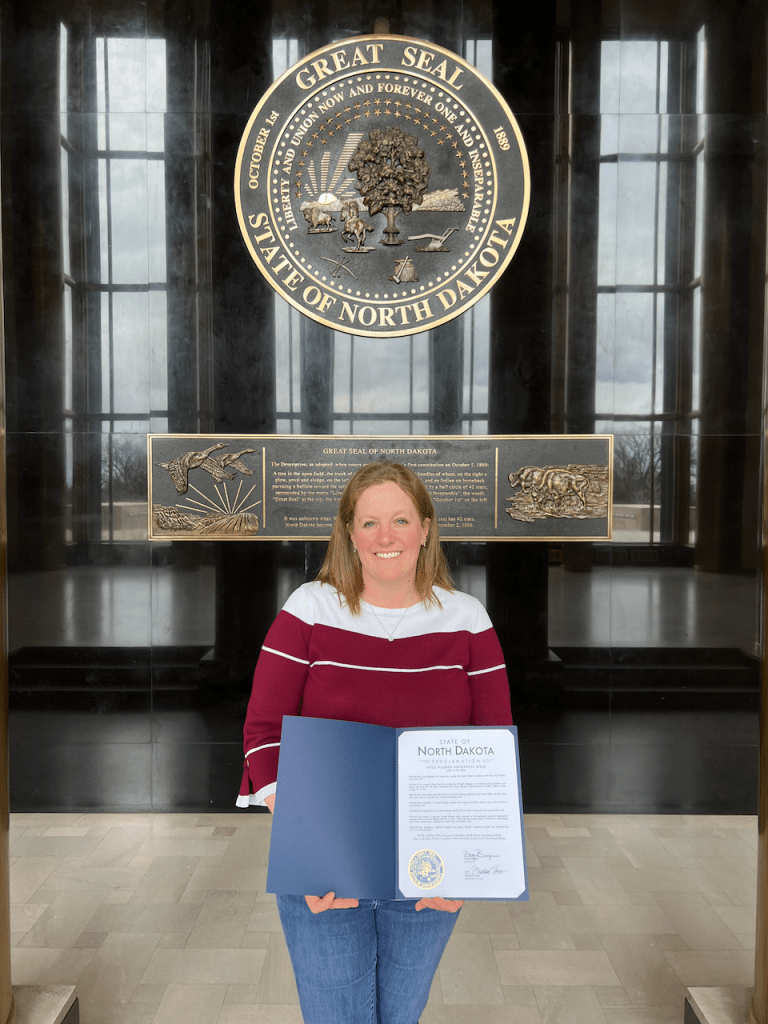
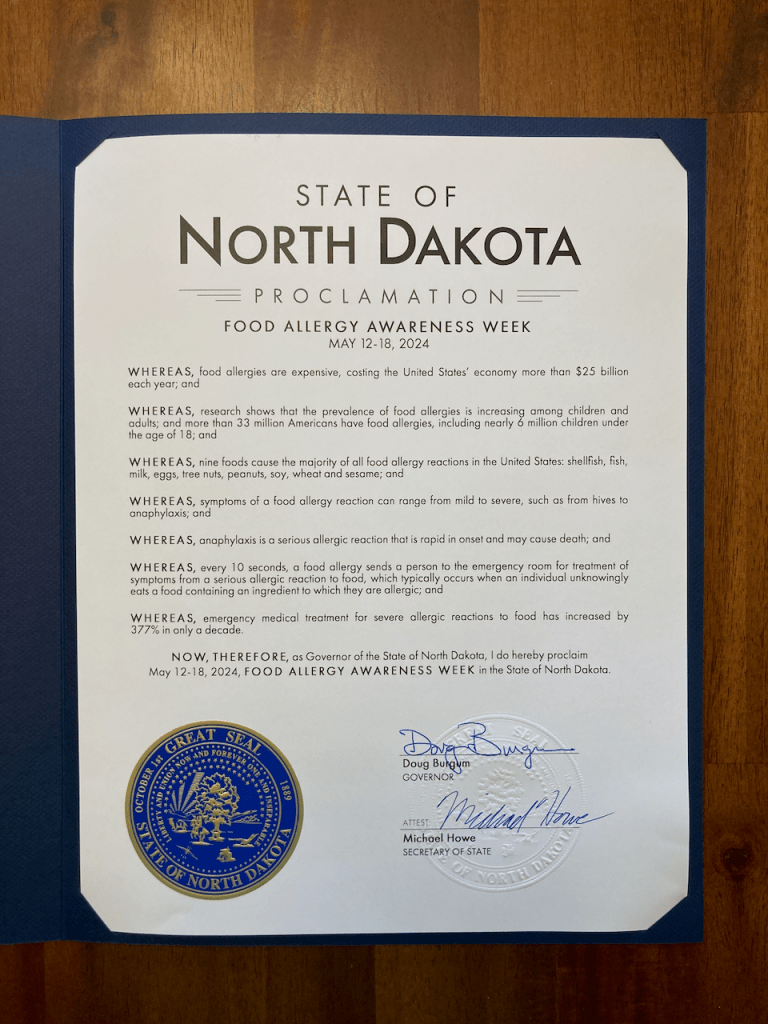
May is Food Allergy Awareness Month, and I’m so excited to kick it off by thanking Governor Doug Burgum for proclaiming May 12-18, 2024 as Food Allergy Awareness Week in North Dakota! Being a food allergy parent is the most difficult role I’ve ever had – a long journey with a steep learning curve. But while we did not choose this life, we can choose how we respond to it. I advocate for my children and all those living with food allergies because a little kindness, compassion, and understanding make a world of difference.
Also, thanks to Food Allergy Research and Education (FARE) for their leadership and resources on how to request a proclamation! You can visit their website to see if a proclamation has been requested or declared in your state.
Ah, social media. It can be exciting, glamorous, eye-catching, engaging, and addictive. Some organizations have entire teams to manage their presence on social media platforms. I recently wrapped up some social media work for a client. After I chatted with them about insights I gleaned from creating and sharing social content for them, I added, “But don’t forget about email.”
Wait, what? Email has been around for decades! There’s nothing exciting or glamorous about it. Just hear me out, and I’ll explain what I mean.
Social media in recent years has become increasingly fragmented, especially post-pandemic. There’s Facebook, Instagram, Threads, X (formerly Twitter), Bluesky (a Twitter alternative), YouTube, Snapchat, LinkedIn, Pinterest, TikTok (facing legislation this week to potentially ban it from the US because of its ties to China), and more. It is impossible to be everywhere and reach everyone in your audience.
But after all these years, nearly every person – even your grandparents – has an email address. It’s still the one reliable way you can click a button and reach all of your stakeholders, and they’re less likely to miss your message because it sits in their inbox until they do something with it. (Take that, ever-changing social media algorithms!) It’s easy to ask people to subscribe and provide their email addresses; you may have them already. (But always make sure you have permission to use their email – spam is not cool.)
More people are moving back to email as the primary way to read information from places where they’ve subscribed. Everything they need is in one place, without the drama and toxicity that can accompany social media. (The topic of a recent conversation I had with another client.)
Don’t get me wrong – social media is still a wonderful way to connect with your audience, depending on where they’re engaging and what your needs are. But don’t neglect email either. The two can work in tandem as part of a solid communication strategy.
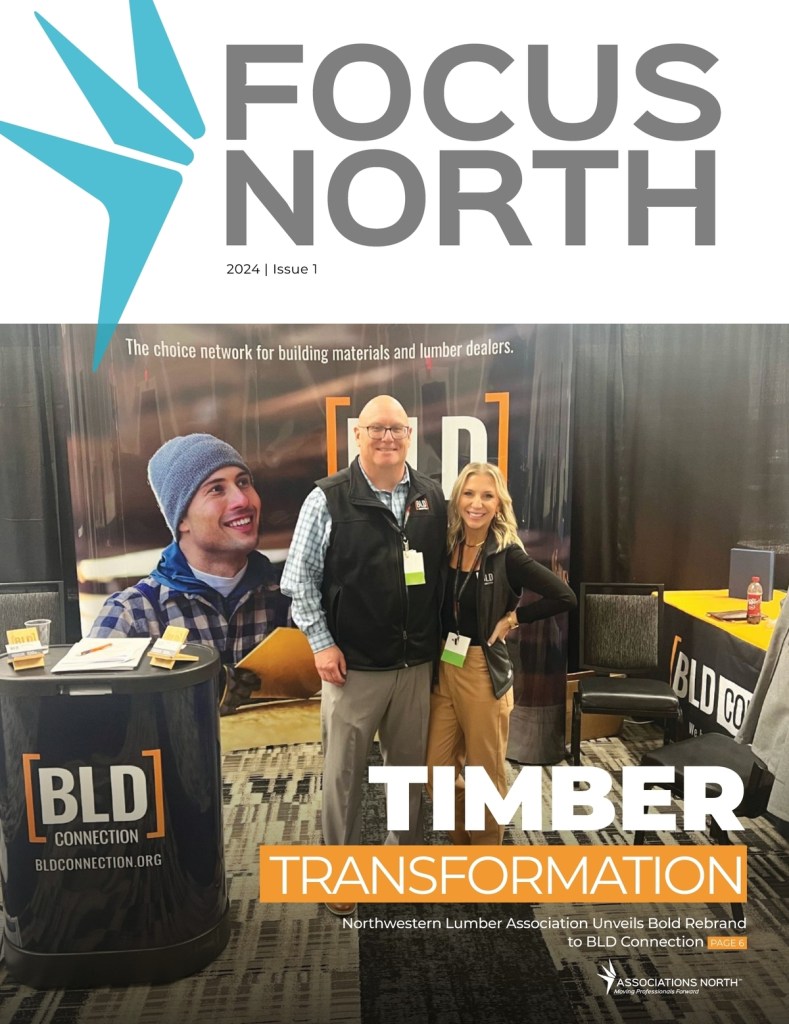
I really enjoyed writing the latest Associations North Focus North cover story about Northwestern Lumber Association’s recent rebrand to BLD Connection. Cody Nuernberg, Melanie Hultman, and team have been doing some incredible work the past seven months (in partnership with Mercury Creative Group)! When an association has been around for 134 years, you learn to evolve and embrace change.
Sometimes it’s challenging to explain exactly what a communicator does, so it’s been refreshing for me to join the International Association of Business Communicators. It’s a global network of my communications peers who understand exactly what I do – because they do it too!
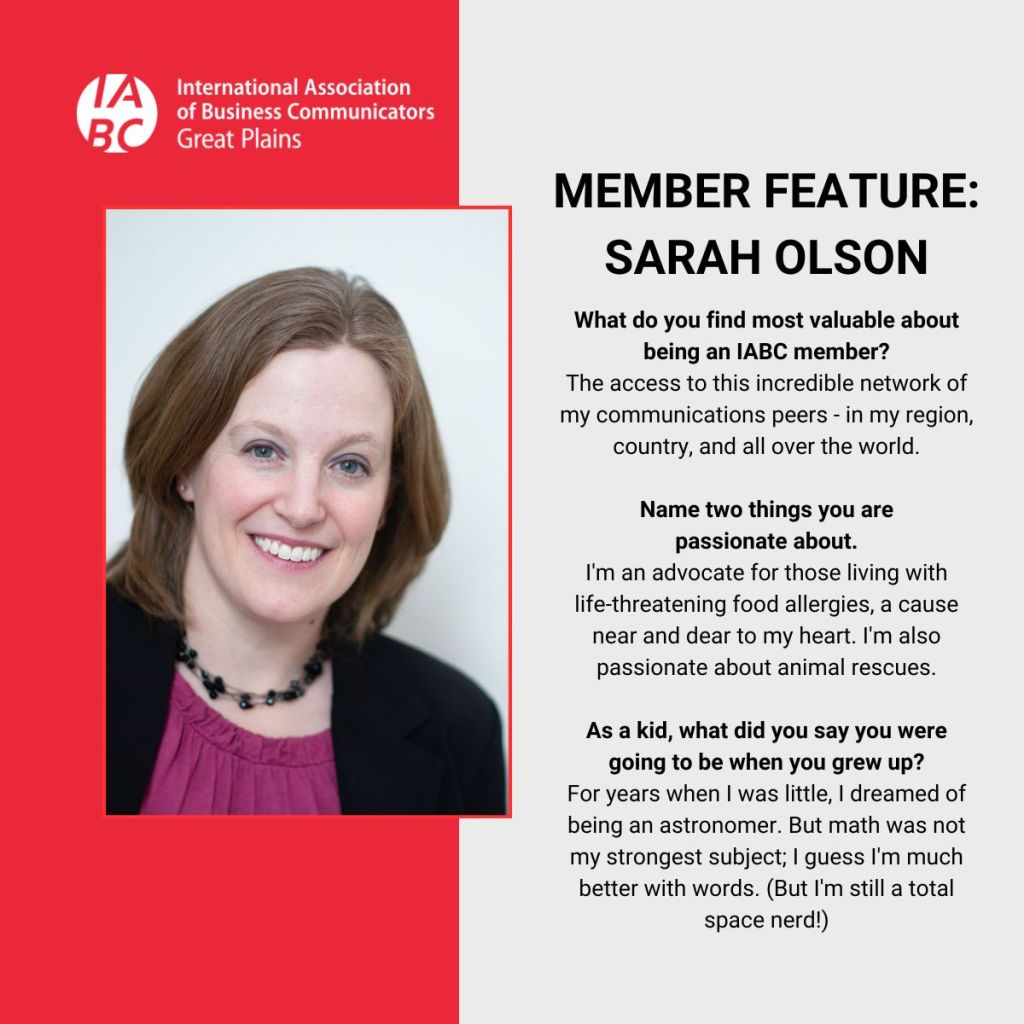
Thanks to my local IABC Great Plains chapter for today’s member spotlight. I’m excited to be part of this group of stellar communicators.
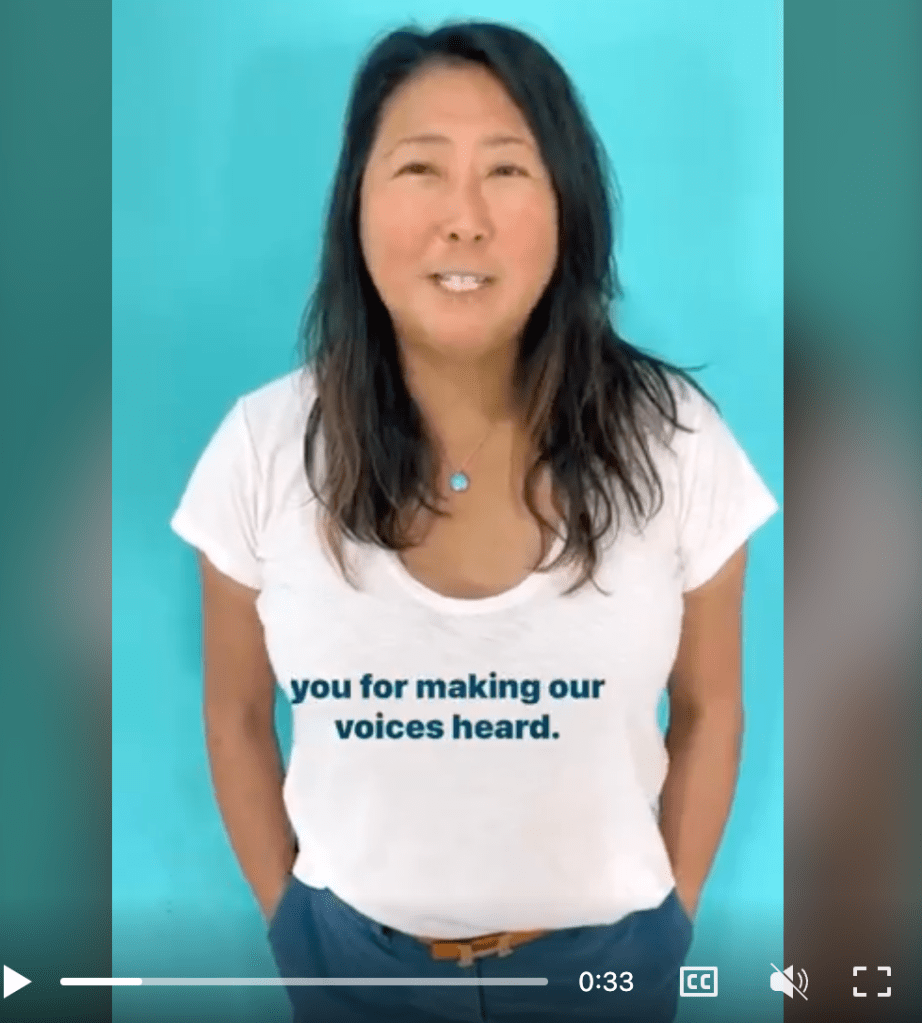
On Friday afternoon, February 9, Food Allergy Research & Education (FARE) CEO Sung Poblete (pictured) announced that she had spoken with Uber, and they will be editing out the part of their Super Bowl ad that referenced the peanut allergy. THANK YOU for listening, Uber, and taking steps to be more inclusive of the food allergy community! I can’t tell you how happy I am to hear this. And thanks to FARE for being our voice and advocate. A little bit of empathy and compassion goes a long way.
The food allergy community’s response to the original ad was swift and unified, making it clear that this kind of portrayal of people suffering from life-threatening food allergies is dangerous and not acceptable. My own LinkedIn post about it was featured by the LinkedIn News team to accompany its own article on the subject. It has since garnered over 16,500 impressions and multiple comments.
Removing that part of the ad before airing during the big game was a huge win! I didn’t have to warn my child with a severe peanut allergy about it. His friends, classmates, their families, teachers, and millions of others didn’t see it and think it’s okay to make fun of people with food allergies. I’m hopeful this will help us build partnerships in the future with Uber Eats and others, working together to make the world better and safer for those living with food allergies.
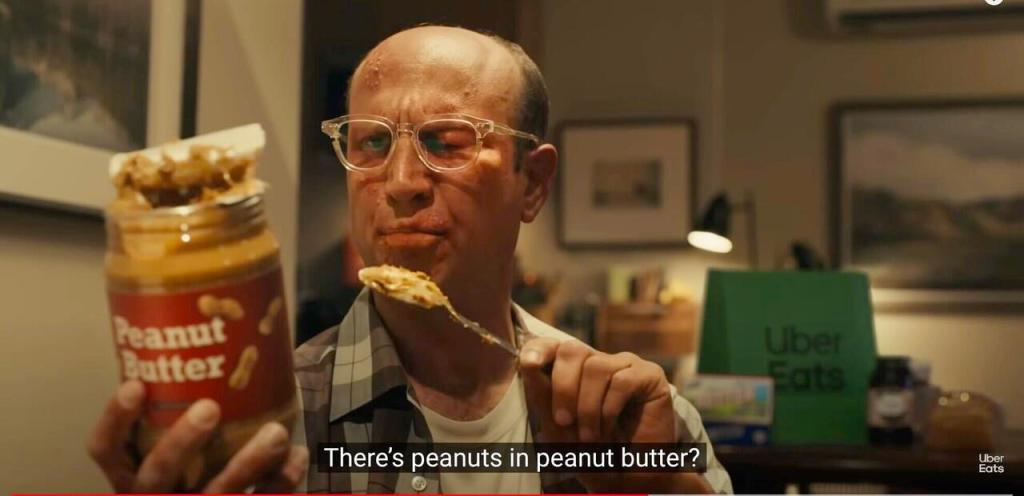
I’m so disheartened to watch this Uber Eats Super Bowl ad. You would never joke about someone with cancer or diabetes, but it’s still considered okay to make fun of people with life-threatening food allergies. It’s not funny, and it’s not okay. Orla Baxendale died just last month after eating mislabeled cookies that contained peanut.
Now I have to warn my child with a life-threatening peanut allergy before watching the game about this. It’s scary enough to live with food allergies without seeing this harmful content during the biggest football event of the year.
You know what would have been a better marketing strategy for a food service? Show how accommodating you can be! The restaurants that get my money are the ones who show they care about my family and go out of their way to keep my food allergic children safe.
Let’s build connections and inclusiveness instead of mocking people.
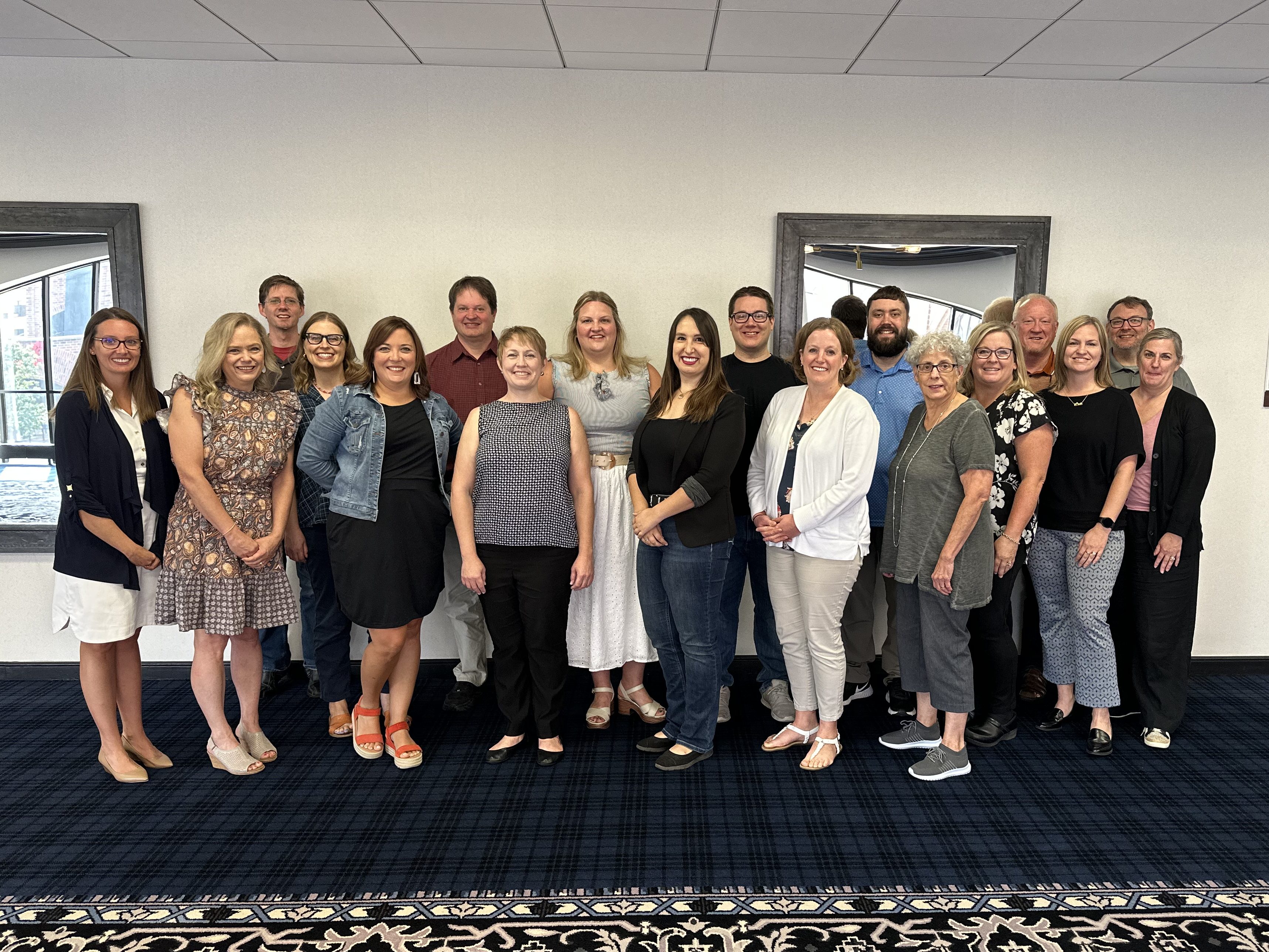
One of the best ways to develop your professional skills is to immerse yourself in learning opportunities with peers who do what you do. I enjoyed being part of Associations North‘s 2023 MarCommSync mentorship series, which just wrapped up last week! (That’s me in the white cardigan.) Over six sessions, I joined other communicators and marketers with facilitator Amy Hager to dive deeper into communication strategies that convert into an engaged community.
Here are a few takeaways that gave me encouragement and a fresh perspective:
• Marketing is about helping someone solve a problem. • Marketing is a big experiment, so it’s okay if you don’t nail it every time. • Messaging is meant to provoke a conversation, not make a sale. • Communication is answering the question, “Who cares?” • Use stories! Let people see themselves in your content.
Thanks to my cohort for their energy, enthusiasm, and providing a space space to test new ideas!
Recently, I was reflecting with a client about Food Allergy Awareness Week, which is recognized every May. While my experience with food allergies has been a deeply personal one, I had never considered the business implications until this client suggested that managing food allergies is an important issue relating to equity/diversity/inclusion/accessibility (EDIA). From that perspective, it’s something that all organizations should have on their radar.
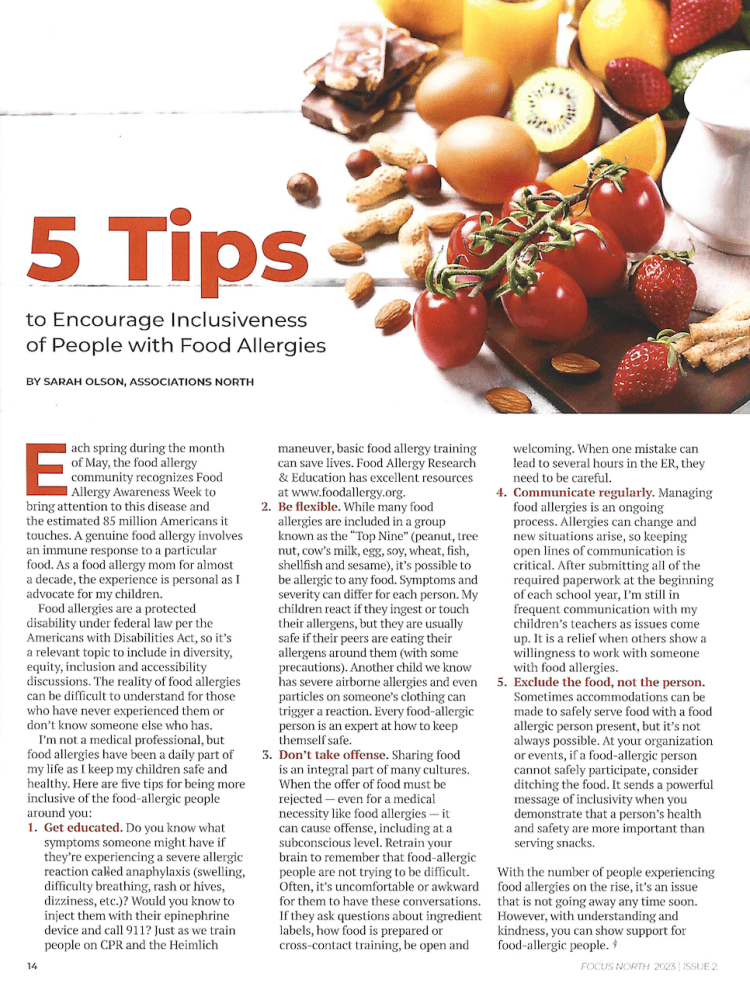
Thanks to encouragement from this client, I wrote an article for the EDIA column in the 2nd quarter 2023 issue of Focus North, which was just published yesterday! For people living with food allergies, knowing what foods to avoid and how to treat emergencies is only half the battle; they also have to learn to navigate social and cultural situations, and it’s helpful if others are supportive.
Check out my five tips for being inclusive of those with food allergies:
1. Get educated. 2. Be flexible. 3. Don’t take offense. 4. Communicate regularly. 5. Exclude the food, not the person.
It has been almost a decade since the reality of being a food allergy mom hit me like a truck. I remember being terrified during that first allergist visit when my child was officially diagnosed with multiple severe food allergies. I sat there stunned as the doctor matter-of-factly trained me on how to watch for severe reactions (like my child not being able to breathe) and how to inject my baby (yes, hadn’t turned one yet) with epinephrine in case of anaphylaxis.
It has been a long, difficult journey and a steep learning curve. But now, with two children with food allergies and years of experience keeping them safe and healthy, I’m proud to say I’m a food allergy advocate and an Allergy Ally.
During this Food Allergy Awareness Week, I’m reminded that while we did not choose this life, we can choose how we respond to it. A little kindness, compassion, and understanding go a long way. Sending love to everyone with food allergies – and the countless individuals who help care for them. It makes a world of difference!



 Spring Creek Consulting, LLC